


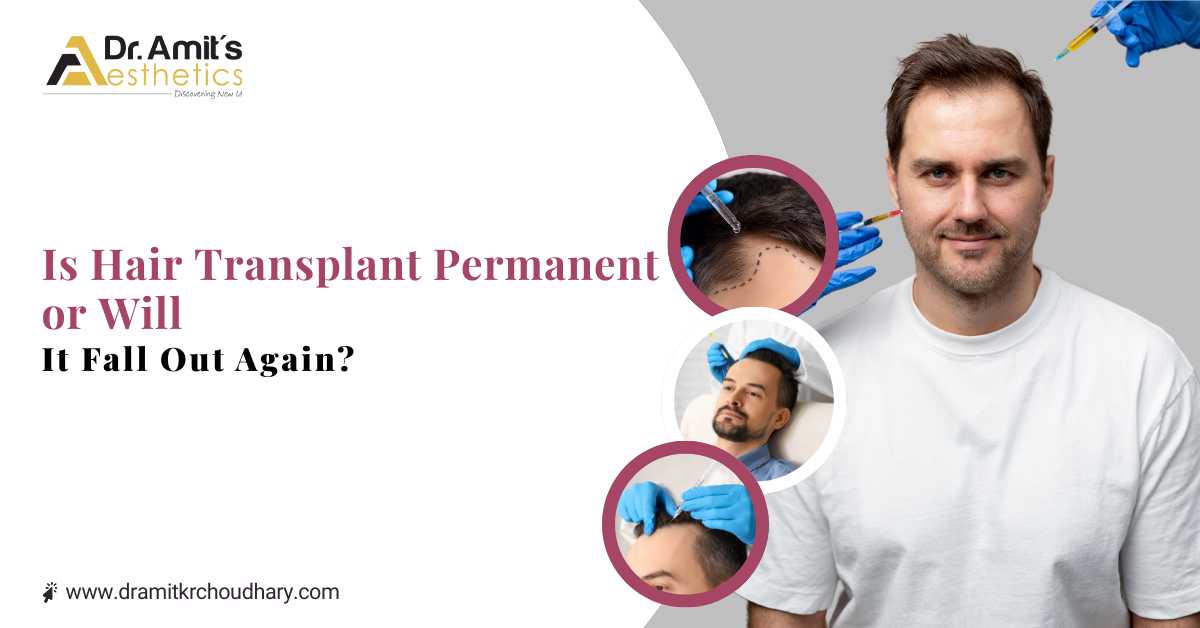

Feeling anxious about hair loss is natural, and it can affect both men and women. From home remedies that do not work to certain medications with serious side effects, hair restoration with no downside seems impossible. In such a case, you may consider hair transplantation as a long-term solution to restore your hair. This can also bring a question to your mind,is hair transplant permanent, or will it fall back again? Though a hair transplant is one of the most permanent solutions, the result depends on several factors. In this blog, we will try to answer this question for you and help you understand the treatment in a better way.
Also Read: Laser Hair Treatment vs. Traditional Hair Removal Methods: Which is Better?
Understanding Hair Transplant as a Permanent Solution
You can look for a hair transplant if you are experiencing hair loss and baldness. Hair transplant is a surgical procedure that moves hair follicles from the donor area, such as the back and sides of the scalp, to the balding or thinning areas. This procedure is also known as hair restoration or hair replacement, and it is usually the resort for people who have tried all the other hair loss treatments and failed. Your dermatologists or plastic surgeons expert in reconstructive procedures, perform hair transplant procedures. There are two main techniques followed for hair transplants, such as:
Follicular Unit Transportation (FUT): This technique involves the strip method, taking a strip of skin with hair follicles from the donor area of the scalp. After that, this is sectioned, and the removed grafts are transplanted to the areas where baldness and thinning have happened. The plastic surgeons moving these strips contain many follicular units ranging from hundreds to thousands, while these follicular units typically consist of 1-4 hairs. This procedure allows your plastic surgeon to transplant several grafts in one session. Following that, removing the strips leaves a visible linear scar on the donor area.
Follicular Unit Extraction (FUE):To treat hair loss and baldness, your plastic surgeon extracts individual hair follicles from the scalp and transplants them to the balding areas. They involve a micro punch to separate the eac hair unit from the surrounding tissue to remove it. Unlike FUT, FUE hair transplant is more advanced and leaves only minor scars that are not noticeable. Also, the recovery time is faster than strip harvesting. This technique is suitable for both men and women suffering from pattern baldness and looking to restore and grow hair permanently.
Is Hair Transplant a Permanent Solution or Does It Need Maintenance Later?
There are a lot of questions and uncertainty about the procedure. One of the most frequently asked questions remains whether a hair transplant is permanent or if the new hair eventually falls out. The answer to the question of whether a hair transplant is permanent is yes, but there are distinctions. The follicles transplanted by the plastic surgeon are permanent as they are resistant to genetic-factors and hormonal changes causing hair loss. But the natural hair surrounding the transplanted area may continue to thin or lose following certain reasons such as genetics, ageing, or hormonal changes. This suggests that the transplanted hair remains intact. Spoke patients may require additional treatment later for maintenance of overall density.
Maintenance does not suggest your hair transplant treatment has failed; rather, it reflects the progressive nature of hair loss. Treatments like PRP (Platelet- Rich Plasma), a non-surgical method that uses the patient’s own blood to inject into the balding areas to stimulate hair follicles, medications, and follow-up care enhances the overall appearance, along with preserving existing hair.
What Are The Key Factors that Determine How Long Hair Tranplant Lasts?
Despite being a permanent solution, the longevity of a hair transplant can be influenced by several factors. In this, genetics play a crucial role, especially when you have aggressive hair loss patterns and experience thinning in untreated areas. Additionally, the surgeon you choose also impacts the outcome of your hair transplant treatment. Their skill and expertise in graft handling, placement and precise transplantation determine survival rates and natural appearance. Furthermore, post-treatment care is equally important, including following medical advice regarding scalp hygiene, sun protection and medication use. These ensure optimal healing and graft survival.
Also, your lifestyle choices such as diet, stress management and abstinence from smoking and alcohol contribute to the long-term results of the treatment. You can maximise the longevity of hair transplant results by addressing these factors.
What Happens After a Hair Transplant Procedure?
Post-hair-transplant patients experience a natural growth cycle. Initially, after 1 to 4 months, the transplanted hairs will shed and are known as shock loss, which is completely normal. This phase is temporary, and it suggests that follicles are entering a new growth cycle, known as anagen, and within three to four months, new hairs begin to grow, gradually increasing in thickness and density. After six to nine months, you can notice a visible improvement as rapid hair growth continues. Typically, by twelve to eighteen months, full results may appear, and hairs will be fully established at this stage. After this phase, hairs are permanent, and new hair can be treated like natural hair, allowing you to cut, style, and groom as desired. By understanding the timeline of hair transplant, you can help yourself set realistic expectations and remain confident throughout the recovery process.
Final Remarks,
With the invention of modern techniques and rising demands, hair transplantation has come a long way in the past few years. Hair transplant can be an effective and permanent solution for your hair restoration and pattern baldness. Plastic surgeons with efficient experience nowadays incorporate advanced methods to redistribute hair follicles from one part of the scalp to another. While a hair transplant may not stop hair loss, ongoing care is the key to maintaining your original hair and the overall health of your hair in the long run. If you are considering a hair transplant, you can consult Dr. Amit Kr Choudhary, an expert plastic surgeon, for an effective solution.